
The Cathedral: “La Manquita” – The One-Armed Lady
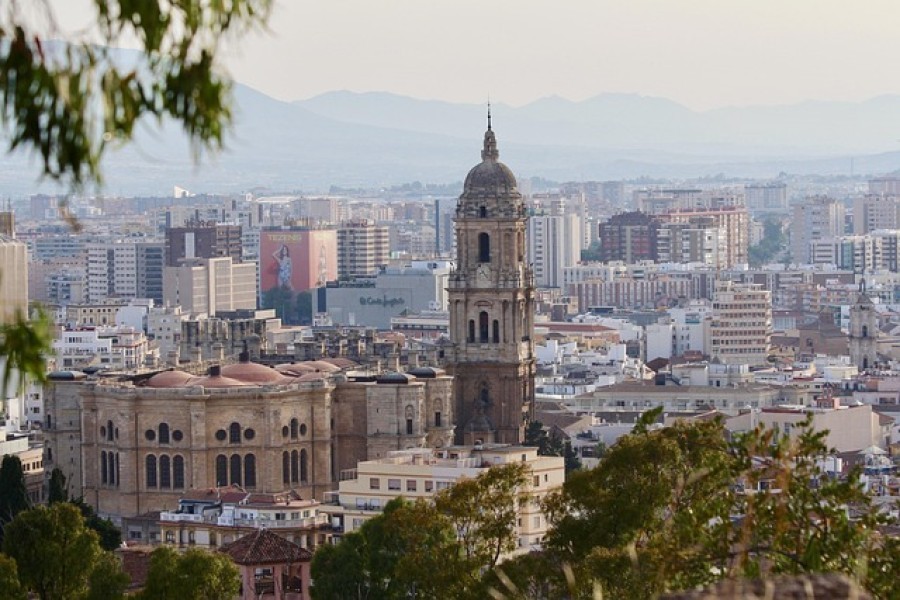
At the heart of the old town stands Málaga’s central landmark: the Catedral de Málaga (Santa Iglesia Catedral Basílica de la Encarnación). It is considered one of the most important examples of Renaissance architecture in Spain. The cathedral measures 117 meters in length, 72 meters in width, and reaches a height of 87 meters.
Its nickname comes from its unfinished south tower, which is why it’s known as “La Manquita” (“the one-armed lady”). Construction began after the city was taken by the Catholic Monarchs in 1487 and wasn’t completed until 1768. The interior is laid out in the shape of a Latin cross and is defined by Corinthian half-columns and a carefully designed lighting concept.
The Alcazaba: A Moorish Fortress Above the City
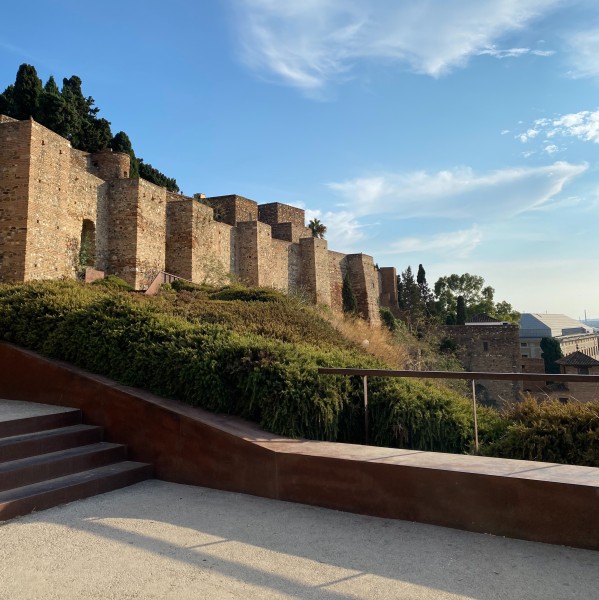
Right next to the Roman Theatre rises the Alcazaba of Málaga, one of the city’s most important landmarks. Built in the 11th century, this Moorish fortress still towers the old town and harbor today. Its maze-like walls, courtyards, and Moorish gardens create a peaceful contrast to the lively city below.
The Alcazaba is designed as a multi-layered fortress with several walls. Its defensive system was carefully planned so that attackers had to pass through numerous gates, narrow passages, and sharp turns before reaching the inner areas, making it extremely difficult to conquer.
Inside, you’ll find the Palacio Nazari, the former residence of Muslim rulers, which stands out with its more refined architectural details. Thanks to the terraced layout, you’ll enjoy constantly changing views over the cathedral, the harbor, and the Mediterranean.
Our Take: Visit on a Sunday after 2:00 PM to take advantage of free entry.
Málaga’s Grand Boulevard: Calle Marqués de Larios
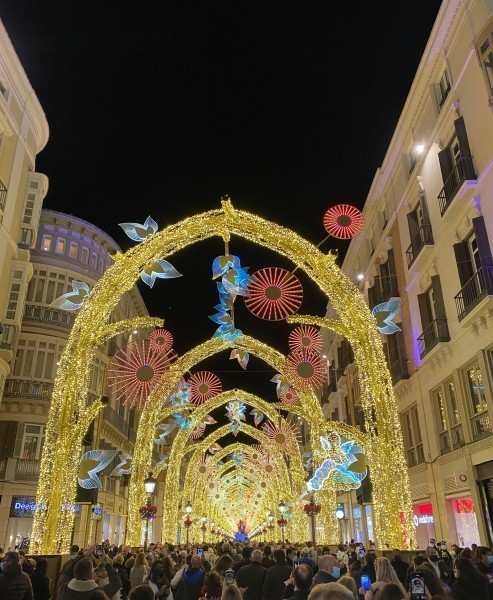
Just a few minutes’ walk from the cathedral, you’ll find Calle Marqués de Larios, Málaga’s most famous shopping street. It connects Plaza de la Constitución with Alameda Principal and serves as both the city’s main retail hub and a popular meeting spot for locals and visitors alike.
The buildings, dating back to the 19th century, feature bright façades, balconies, and symmetrical designs that give the street its elegant, upscale character. In 2002, it was transformed into a pedestrian zone, further enhancing its appeal. Since then, it has become one of Málaga’s top shopping destinations, home to a wide range of national and international fashion brands. Due to high demand among retailers, Calle Larios was ranked the third most expensive shopping street in Spain in 2018.
The street becomes especially spectacular during the Christmas season. Each year, it is transformed by an impressive light installation, with over 16 million LED lights forming a glowing canopy overhead. The lights are officially switched on at the end of November and typically remain until early January.
Gibralfaro Castle: Panoramic Views Over Málaga
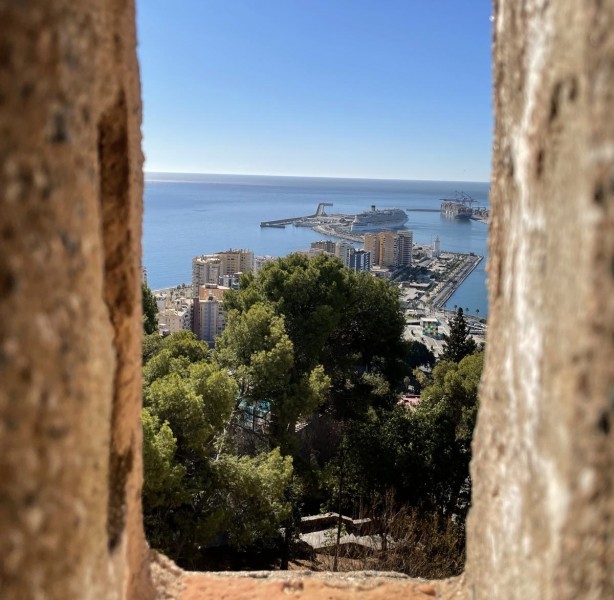
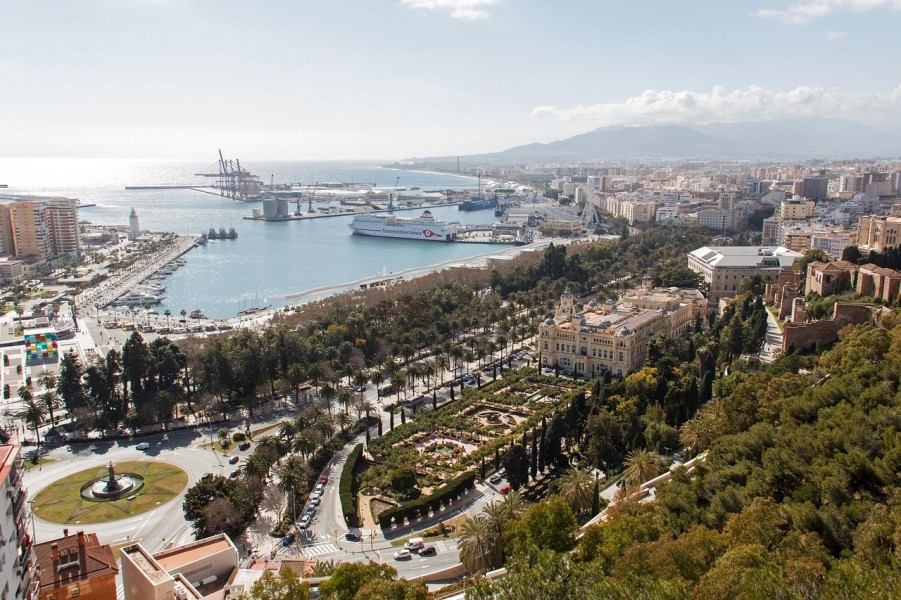
Higher up on the Gibralfaro hill sits the Castillo de Gibralfaro, a fortress that continues to shape the city’s skyline. Located at around 135 meters above sea level, it offers sweeping views over the old town, the harbor, and the coastline of the Costa del Sol.
The castle is closely connected to the Alcazaba below, together forming a unified defensive system. Most of the walls you see today date back to the 14th century, when the fortress was expanded by the Nasrid ruler Yusuf I. In 1487, after a prolonged siege, it was captured by the Catholic Monarchs.
Today, the castle is best known as a historic landmark and one of Málaga’s top viewpoints. The walk up is especially worthwhile, as it rewards you with beautiful views over the city along the way.
Harbor Promenade Muelle Uno: Where City and Sea Meet
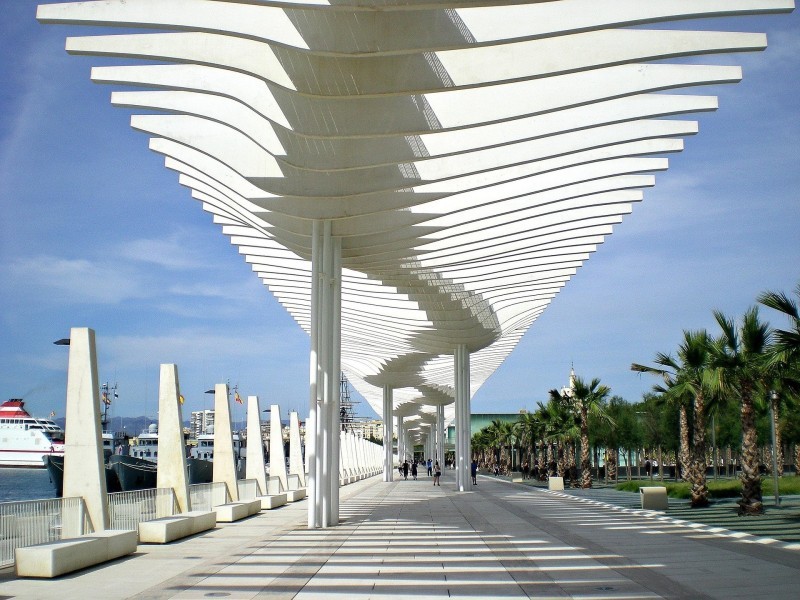
Muelle Uno is one of Málaga’s most beautiful waterfront promenades, where the old town seamlessly blends into the Mediterranean. The modern promenade features wide walkways, seating areas, and a variety of shops and restaurants right by the water. Palm trees line the paths, creating pleasant shaded spots along the way.
One of the most eye-catching landmarks is the Centre Pompidou Málaga, with its distinctive colorful cube, hosting rotating exhibitions as an international art institution in the harbor area. Yachts are moored on both sides, while cafés and terraces invite you to relax and take in the views of the boats and the lively harbor scene.
The Picasso Museum: Art in Picasso’s Birthplace
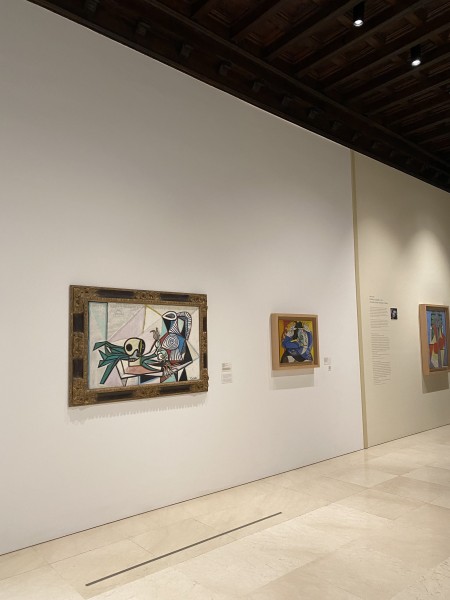
Located in the heart of the old town, the Museo Picasso Málaga is one of the city’s most renowned cultural attractions. Pablo Picasso was born in Málaga in 1881, and the museum is dedicated to his extensive body of work. It features around 400 pieces spanning more than eight decades, including paintings, sculptures, and ceramics. The collection offers a comprehensive overview of Picasso’s artistic evolution and his different stylistic phases.
The museum is housed in the Palacio de Buenavista, a historic building that blends Renaissance and Mudéjar elements and stands on the foundations of a former Nasrid palace. Since opening in 2003, it has welcomed over 600,000 visitors each year.
Our Take: Visit on a Sunday during the last two hours before closing to enjoy free admission.
Hike to the Monte Victoria Viewpoint
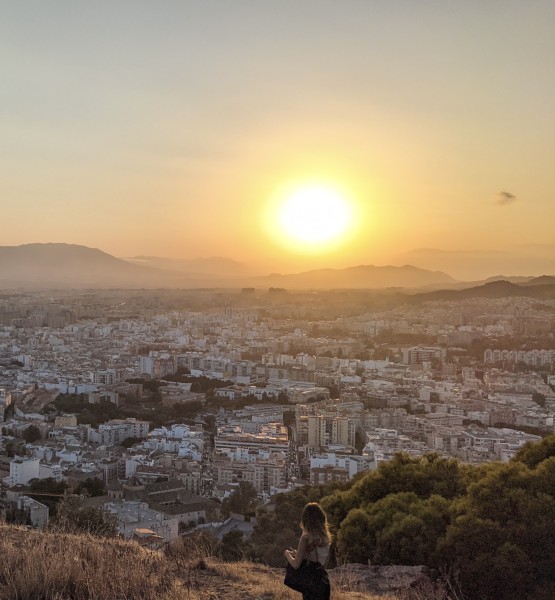
To round off a day in Málaga, a hike up to the Monte Victoria viewpoint is well worth it. This hill above the city is one of the most popular sunset spots in the Málaga region. The route is easy to plan, covering 2,5 kilometers with an elevation gain of about 164 meters, making it suitable for families with children as well as dogs.
There are plenty of opportunities to take a break along the way. Especially in the touristy area around the cathedral and Plaza de la Merced, you’ll find a wide selection of tapas bars, cafés, and small restaurants. Several supermarkets are also located along the route if you want to pick up drinks or snacks on the go.
The hike starts at the cathedral, leading through narrow streets, past the Picasso Museum, and into the lively Victoria district. As you continue, the views gradually open up over the old town, the harbor, and the coastline. At the Mirador Monte Victoria, you’ll be rewarded with an impressive panoramic view over the rooftops, the city, and the sea.
Our Take: Time your hike so you reach the top just before sunset.